
A boy’s bedroom can be more than just a place to sleep. It can become a small world built around the things he loves most — planets, dinosaurs, rockets, mountains, animals, or the feeling of heading out on a new adventure.
The challenge is creating a room that feels exciting without filling every wall and surface with themed decorations.
The best boy room ideas usually start with a simple room and add personality through a few carefully chosen details. That way, the bedroom still feels calm enough for sleeping, practical enough for everyday life, and flexible enough to change as your child grows.
If your child loves space, dinosaurs, exploration, or adventure, these ideas can help you create a room that feels imaginative without becoming too busy.
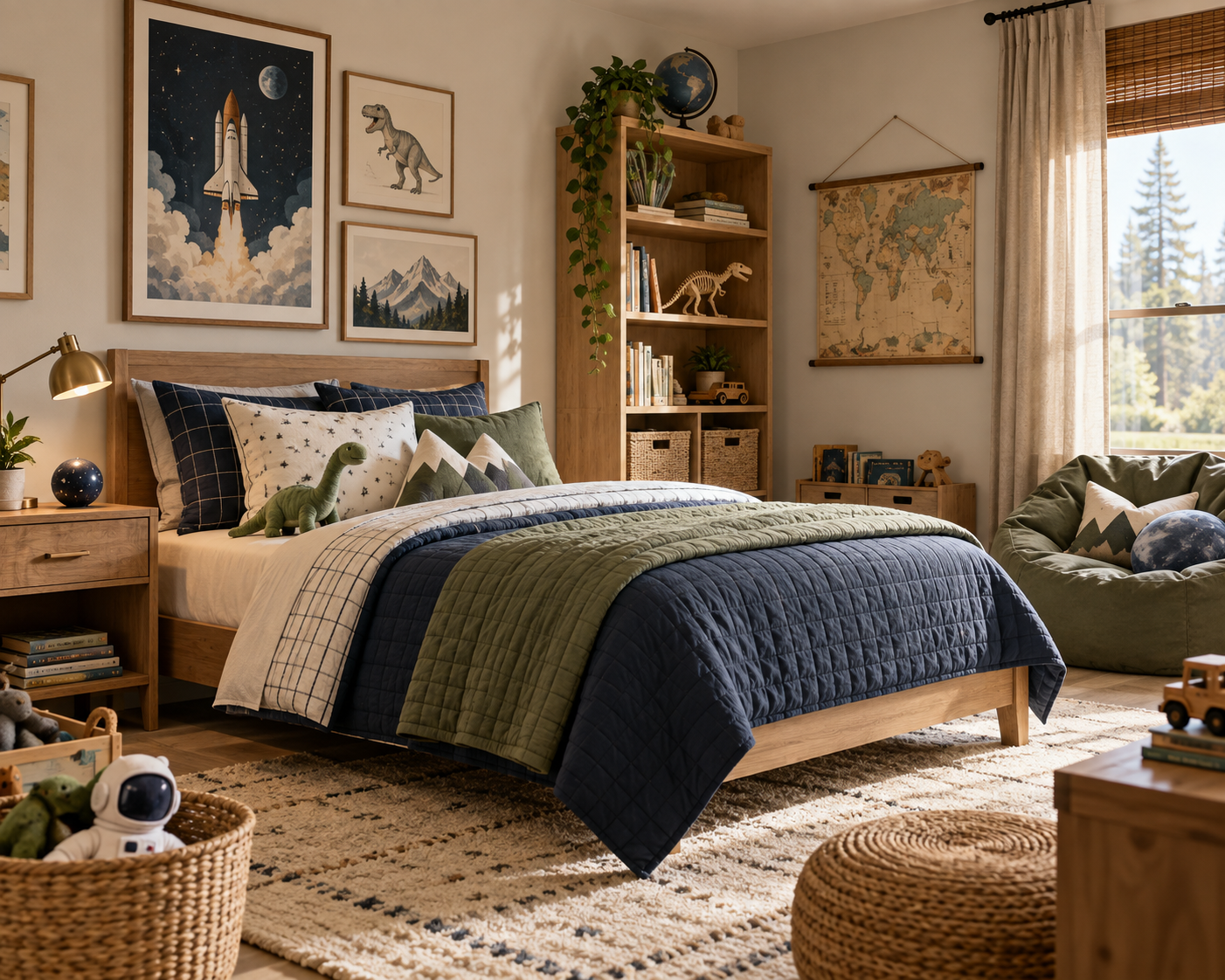
1. Start With a Simple Color Palette
Before choosing decorations, decide on two or three main colors for the room.
Adventure-inspired bedrooms work especially well with colors such as:
- Deep navy
- Soft blue
- Forest green
- Warm beige
- Muted gray
- Rust or terracotta
- Natural wood tones
You do not need to make every object match perfectly.
Instead, use one calm neutral color across larger areas of the room and bring stronger colors into smaller details such as bedding, artwork, pillows, or storage baskets.
For example, a warm white room with navy bedding and natural wood furniture can easily support a space theme without making the entire bedroom dark blue.
The same room could later transition into an outdoor adventure room simply by changing the wall art and a few accessories.
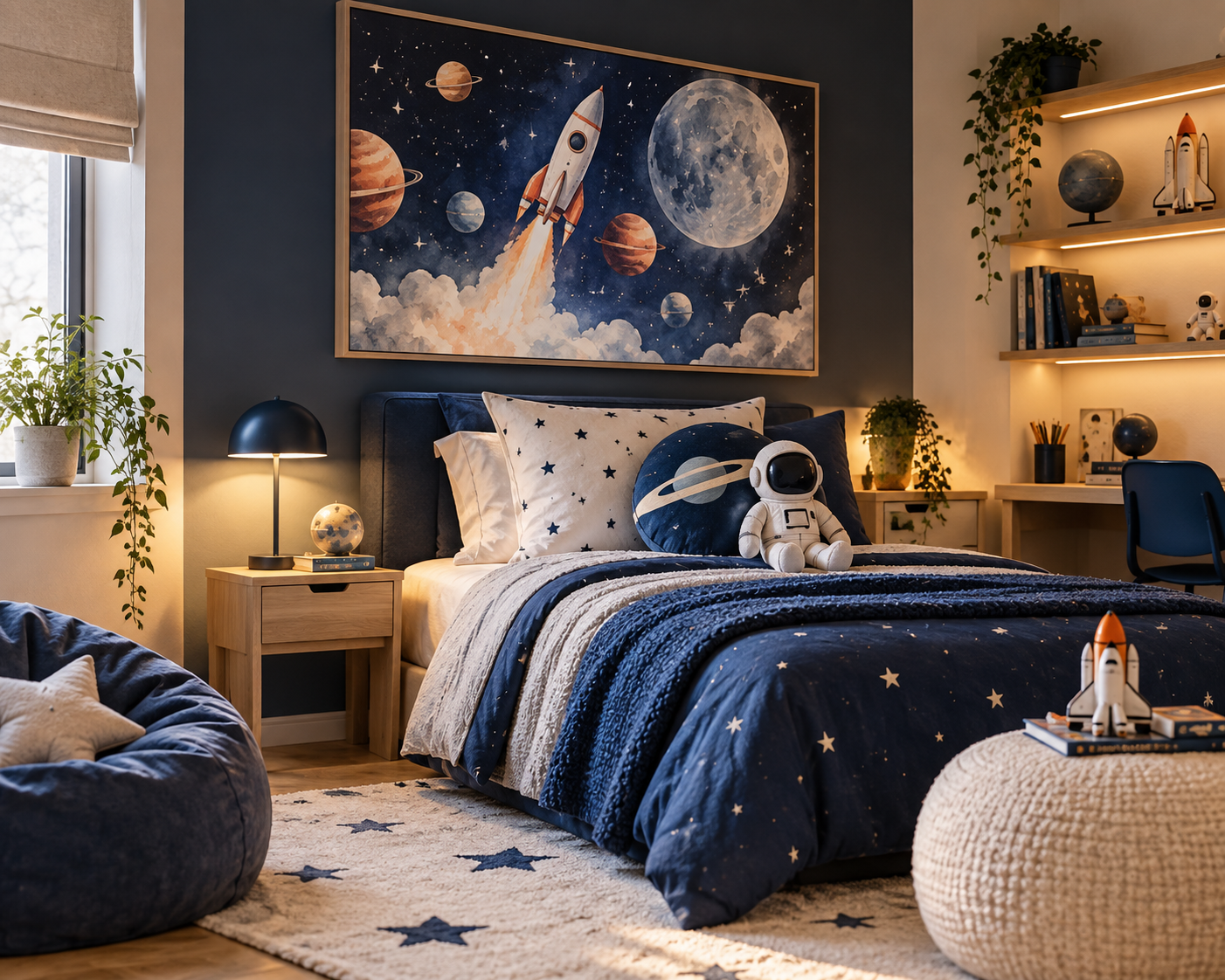
2. Create a Space-Inspired Wall Without Covering the Entire Room
Space themes are popular because they bring imagination into a bedroom without needing complicated decorating.
Instead of covering every wall with planets and stars, choose one area to become the visual focus.
This might be:
- The wall above the bed
- A reading corner
- The wall beside a desk
- A small gallery wall
A rocket, astronaut, moon, or solar system print can introduce the theme while leaving the rest of the room calm.
The artwork becomes a visual clue that says “space room” without requiring rocket-shaped furniture or planets hanging from every corner.
This also makes the room easier to update later.
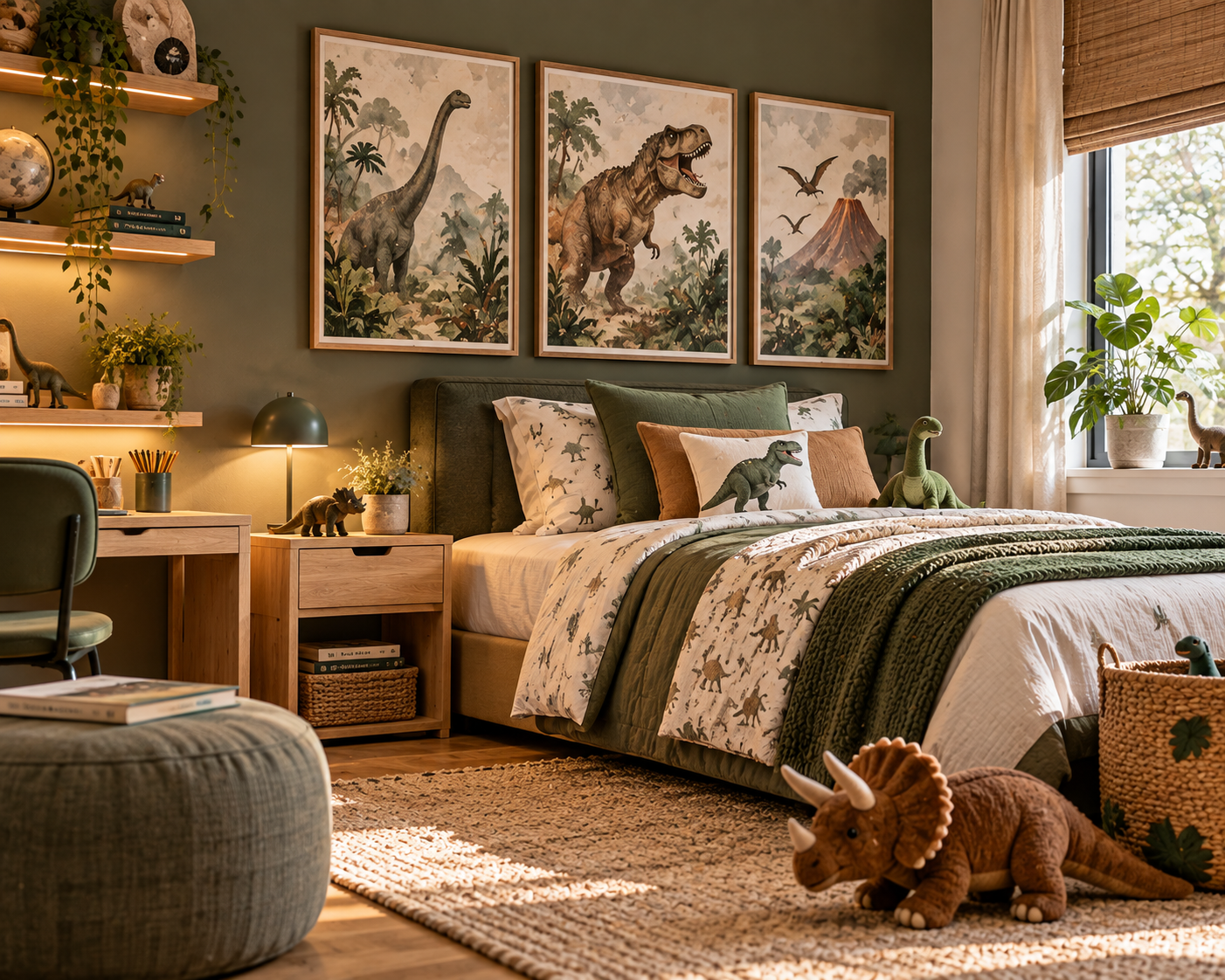
3. Build a Dinosaur Room With Earthy Colors
Dinosaur bedrooms do not have to be bright green rooms filled with cartoon dinosaurs.
A more flexible approach is to borrow colors from nature.
Think about:
- Olive green
- Sand
- Warm brown
- Clay
- Cream
- Charcoal
Then introduce dinosaurs through a few intentional elements.
A dinosaur wall print, fossil illustration, small dinosaur collection, or themed bedding can be enough to establish the idea.
Natural materials such as wood shelves, woven baskets, and cotton bedding work especially well with dinosaur-inspired rooms because they create an earthy, prehistoric feeling without overwhelming the space.
4. Turn the Bed Area Into the Main Adventure Zone
The bed is usually the largest object in a child’s bedroom, so it makes sense to build the design around it.
Instead of spreading decorations around the entire room, focus the strongest visual elements near the bed.
For example, you could use:
- One large piece of wall art
- Two coordinating prints
- A simple patterned blanket
- One themed pillow
This creates a clear focal point.
For a space room, an astronaut or rocket print above the headboard can be enough.
For an adventure room, mountain or forest artwork can give the room an exploratory feeling.
Keeping the main theme concentrated around one area helps the room feel designed rather than crowded.
5. Create an Explorer-Inspired Reading Corner
Adventure does not always have to come from bold decorations.
Sometimes it can come from how the room is used.
A small reading corner can become a place where children explore new worlds through books.
You only need a few elements:
- A comfortable chair or floor cushion
- A small bookshelf
- A soft lamp
- A basket for favorite books
You could add one adventure-themed print above the space — perhaps mountains, planets, wildlife, or a simple map illustration.
This creates a quieter interpretation of the adventure theme and gives the child a dedicated space for reading and relaxing.
6. Use Wall Art to Tell a Small Story
Wall art works especially well in kids’ rooms because it can introduce imagination without taking up floor space.
Rather than choosing several unrelated pictures, look for artwork that feels connected.
For a space room, the story might move from a rocket launching into space to an astronaut exploring the moon.
For a dinosaur room, you might combine a dinosaur landscape with a simple prehistoric illustration.
For an outdoor adventure room, mountains, forests, wildlife, or camping scenes can work together.
The goal is not to create a large gallery.
Two or three coordinated pieces can often create a stronger effect than a wall filled with many small decorations.
At North & Nook, we like wall art to support the room rather than take it over.
7. Add Adventure Through Bedding Instead of Permanent Decor
Children’s interests change quickly.
A child who loves dinosaurs today may become fascinated by space, wildlife, or sports a few years later.
That is why removable and replaceable elements are often better than permanent themed features.
Bedding is one of the easiest places to introduce personality.
You might choose:
- Star-patterned sheets
- Dinosaur bedding
- A mountain-print blanket
- A simple striped comforter in adventure-inspired colors
If your child changes interests later, the bedding can easily be replaced without redesigning the entire room.
8. Keep Toy Storage Part of the Room Design
An adventurous room can quickly become visually chaotic if toys are spread across every surface.
Simple storage helps the room stay practical.
Consider:
- Low storage baskets
- Cube shelving
- Under-bed storage
- Open toy bins
- Wall-mounted shelves
Children are more likely to use storage when it is easy to reach.
Large baskets work especially well for toys that do not need careful organization.
Instead of trying to hide every toy, give the room a few clear places where toys belong.
This helps the themed elements — like wall art or bedding — remain visible instead of competing with clutter.
9. Create a Small Display Shelf for Favorite Things
Children often have collections they are proud of.
Instead of spreading those objects around the room, give them one designated display area.
A simple wall shelf can hold:
- Toy dinosaurs
- Model rockets
- Small vehicles
- Rocks or nature finds
- Favorite books
- Miniature figures
This allows the child’s personality to become part of the room.
The key is limiting the display to one or two shelves rather than turning every surface into storage.
When the collection changes, the display can change with it.
10. Try a Mountain or Outdoor Adventure Theme
Not every adventurous bedroom needs a specific character or interest.
A broader outdoor theme can grow with a child for many years.
Mountain silhouettes, forest scenes, wildlife, maps, or camping-inspired details can create a sense of exploration while remaining visually calm.
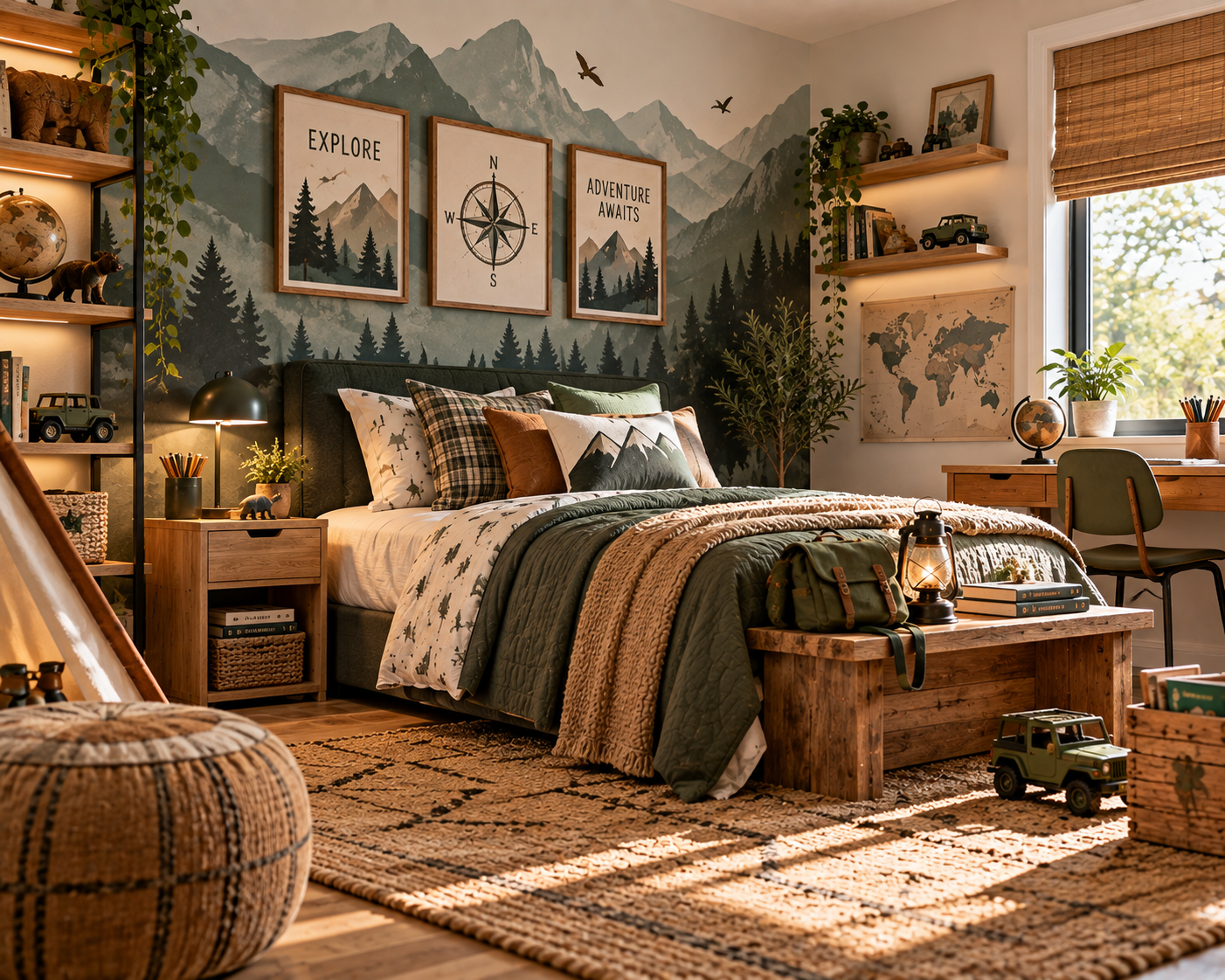
Pair these elements with natural textures such as:
- Wood
- Canvas
- Cotton
- Woven baskets
Colors such as deep green, navy, brown, and warm cream help create a room that feels adventurous but still comfortable.
This type of room works particularly well for older children who may be starting to outgrow cartoon-style themes.
11. Leave Some Walls Empty
One of the easiest mistakes to make when decorating a themed bedroom is trying to fill every empty wall.
You do not need to.
Empty space gives the eye somewhere to rest.
If one wall contains a bold piece of artwork or a gallery arrangement, allow another wall to remain simple.
This makes the themed elements feel more intentional.
It also gives you space to add new things later as your child grows.
12. Make the Room Easy to Change
The most practical boy room ideas leave room for change.
A child’s favorite interest at age five may be very different by age nine.
Instead of designing the entire bedroom around one theme, build a flexible base.
Start with:
- Simple furniture
- Neutral walls
- Practical storage
- Comfortable lighting
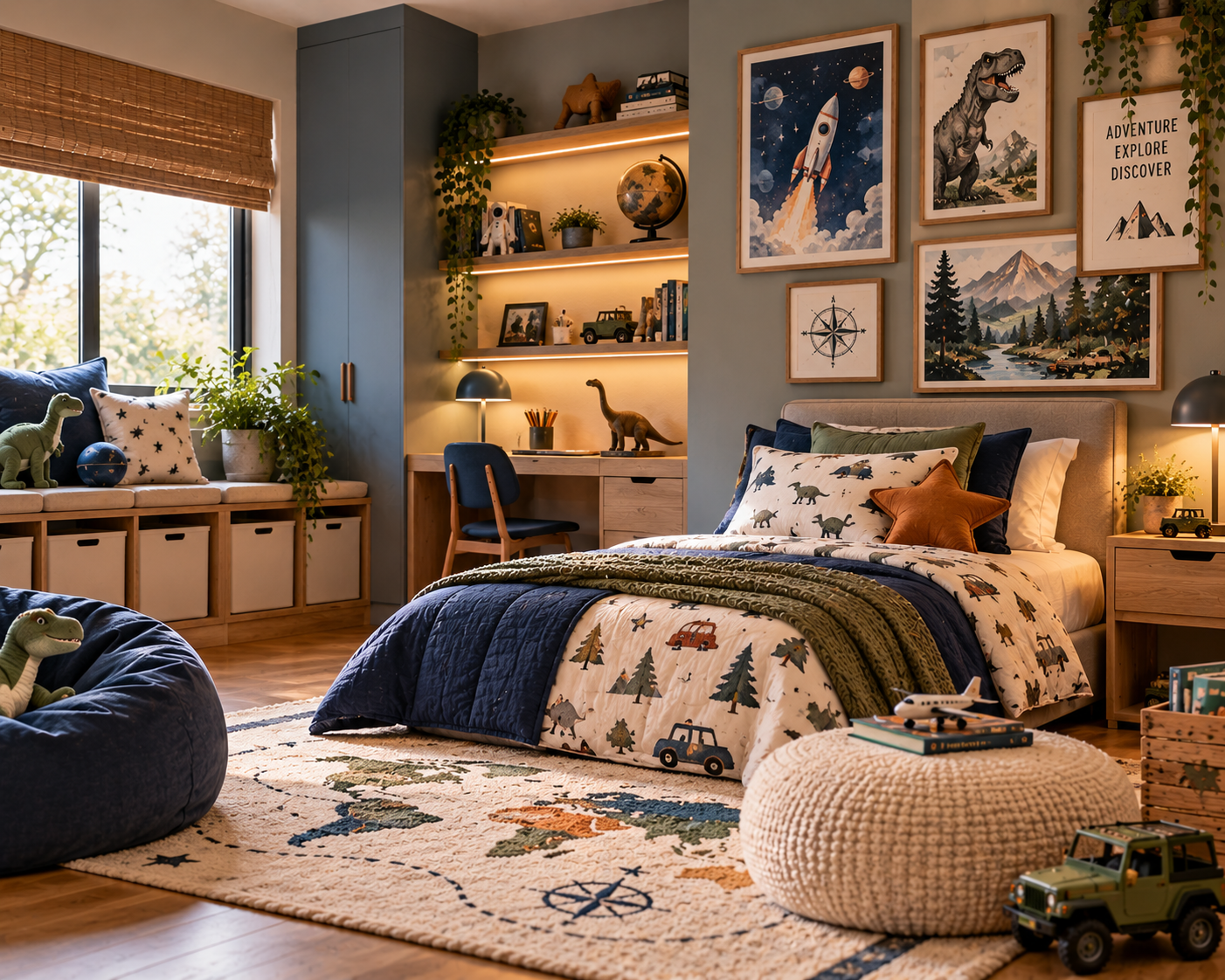
Then bring personality into the room through things that are easier to change:
- Wall art
- Bedding
- Pillows
- Books
- Toys
- Small decorative objects
This approach lets the bedroom evolve without requiring a complete makeover every few years.
Choosing Wall Art for a Boy’s Bedroom
Wall art can help define the room without using valuable floor space.
Above a bed, one larger piece often creates a cleaner look than many small decorations.
In a reading corner or beside a desk, a smaller print can introduce personality without becoming distracting.
For younger children, playful illustrations can work beautifully.
As children grow, artwork featuring landscapes, astronomy, wildlife, maps, or more detailed illustrations can make the room feel slightly more mature.
The important thing is choosing artwork that fits both the child’s interests and the scale of the room.
If you’re looking for more boy room ideas that feel playful without making the space too busy, you can explore our other room ideas for creating a fun but balanced kids’ bedroom.
A Room Built Around Imagination
The best boy rooms are not necessarily the ones with the most decorations.
They are the rooms that give children space to imagine, play, read, build, collect, and rest.
A rocket on the wall might inspire an imaginary trip to space.
A dinosaur illustration might lead to questions about prehistoric animals.
A mountain scene might encourage curiosity about the outdoors.
Those small details can give a room personality without making the space feel crowded.
Whether your child loves space, dinosaurs, or outdoor adventure, start with a simple room and add the story gradually.
A few thoughtful choices can create a bedroom that feels exciting today while still leaving plenty of room for whatever adventure comes next.