
A boy’s bedroom can be playful, colorful, and full of personality without covering every wall and surface with decorations.
The best boy room ideas usually combine a few things the child genuinely enjoys with a practical bedroom that is comfortable to sleep, play, read, and grow in. Instead of repeating one theme everywhere, choose a few strong elements—such as wall art, bedding, color, or a favorite collection—and give them enough space to stand out.
This approach also makes the room easier to update later. Interests can change quickly, while beds, storage, desks, and other larger pieces often need to last for years.
Here are 12 ways to create a boy’s room that feels fun and personal without making the space feel too busy.
1. Keep the Main Background Simple
Start with the parts of the room that are hardest to change: walls, flooring, large furniture, and storage.
These do not need to be completely neutral, but keeping them relatively simple gives you much more freedom with the decorative parts of the room.
Good starting colors can include:
- warm white
- soft gray
- muted blue
- gentle green
- beige
- natural wood tones
A simple background also helps colorful toys, books, bedding, and artwork stand out instead of competing with the room itself.
For example, pale walls and a natural wood bed can work with a space theme today, a dinosaur room a few years later, and a more grown-up bedroom after that.
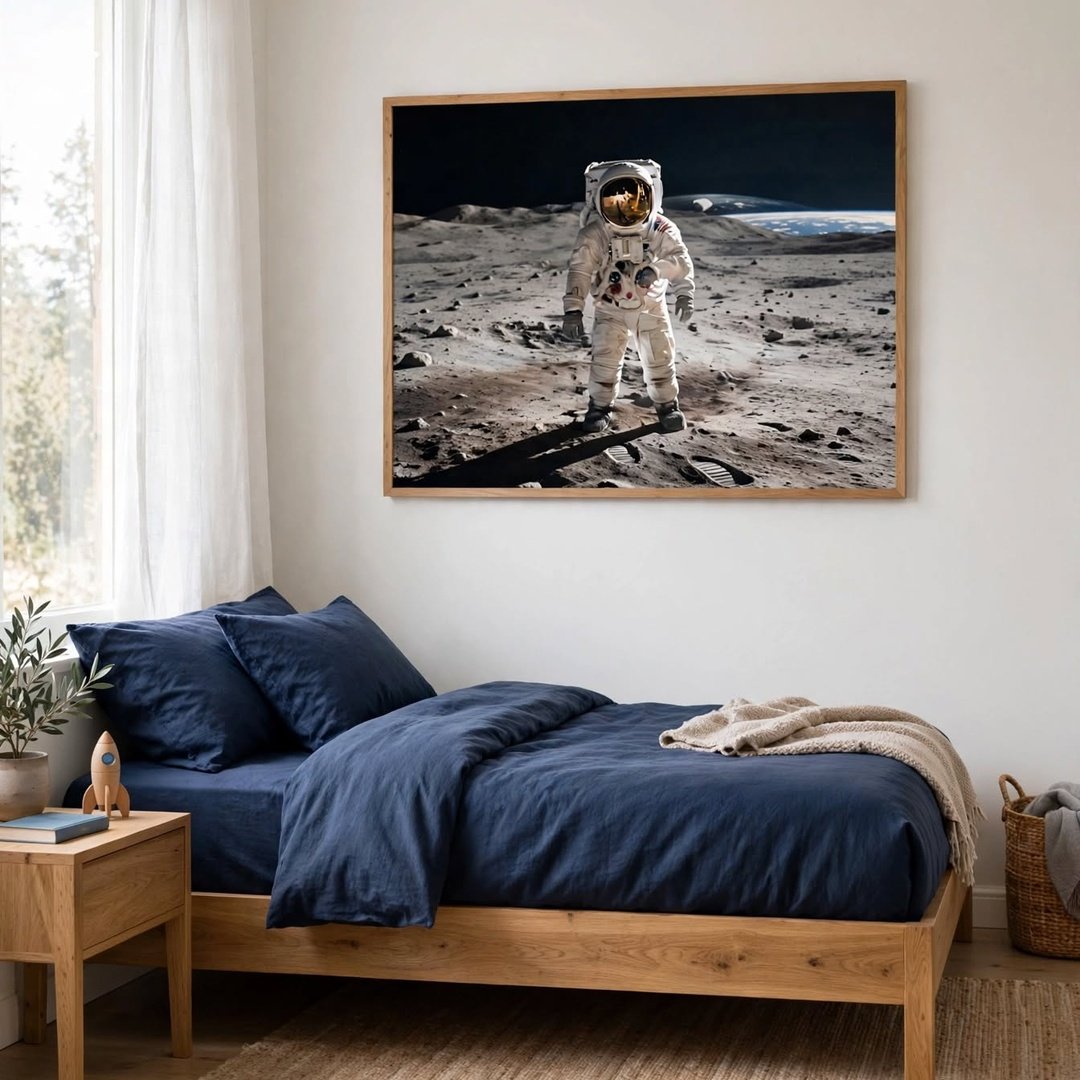
2. Build the Room Around One Main Interest
A themed bedroom usually feels more balanced when one main interest leads the design.
That might be:
- space
- dinosaurs
- ocean life
- animals
- sports
- transportation
- nature
- adventure
The theme does not have to appear on every object.
A space-inspired room, for example, might use one astronaut artwork, navy bedding, and a small shelf of space books. The curtains, furniture, rug, and storage can remain simple.
This allows the child’s interest to be obvious without making the room feel like every item was purchased from the same themed collection.
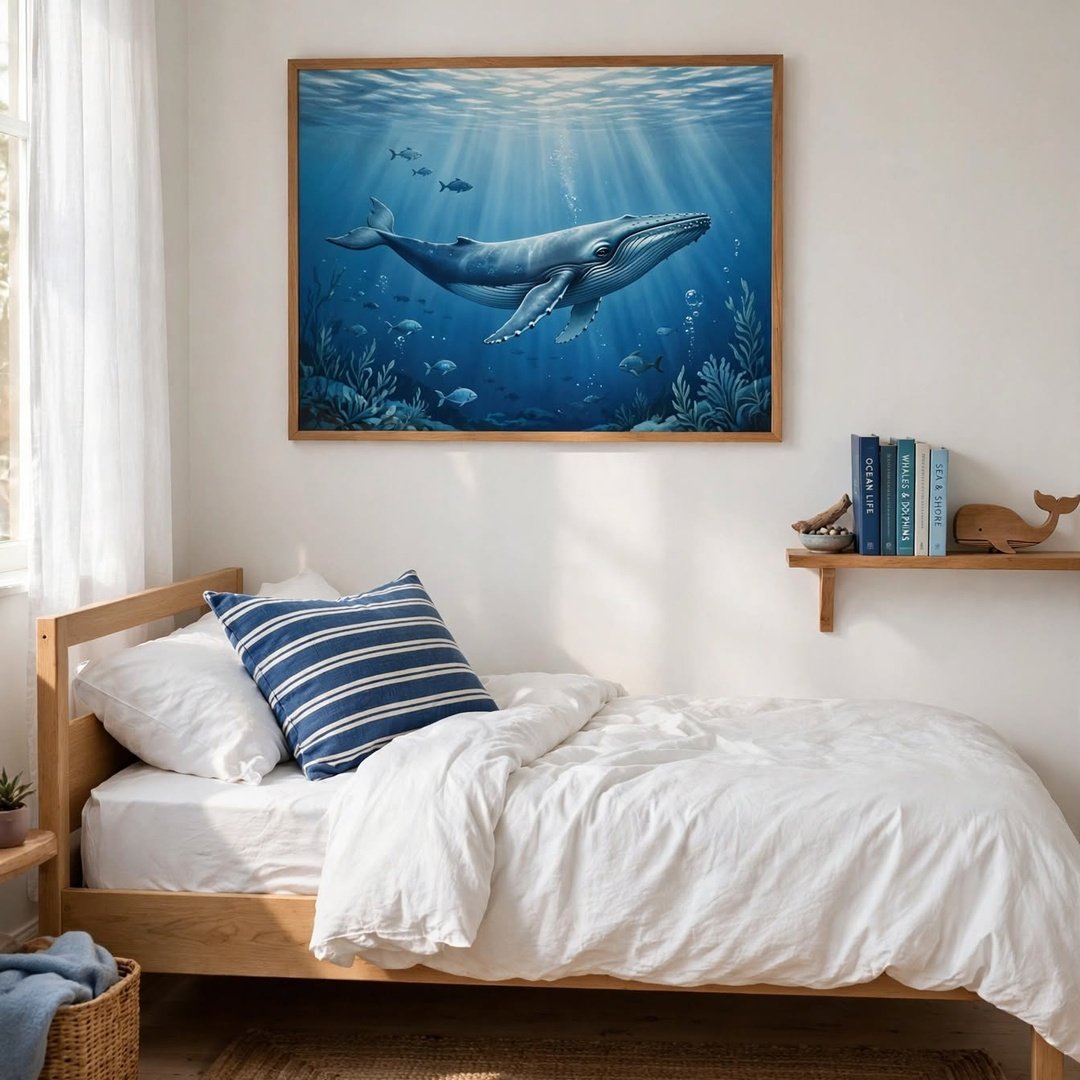
3. Use Wall Art to Create a Clear Focal Point
Wall art is an easy way to add personality without taking up floor or storage space.
One larger artwork can often make a stronger statement than several small themed decorations scattered throughout the room.
Useful places for wall art include:
- above the bed
- above a dresser
- beside a reading area
- over a low storage unit
- on the room’s main empty wall
If the artwork already contains strong imagery—such as an astronaut on the moon, dinosaurs, or an underwater scene—the rest of the room can be quieter.
This works especially well in smaller bedrooms, where too many decorative objects can quickly make the space feel crowded.
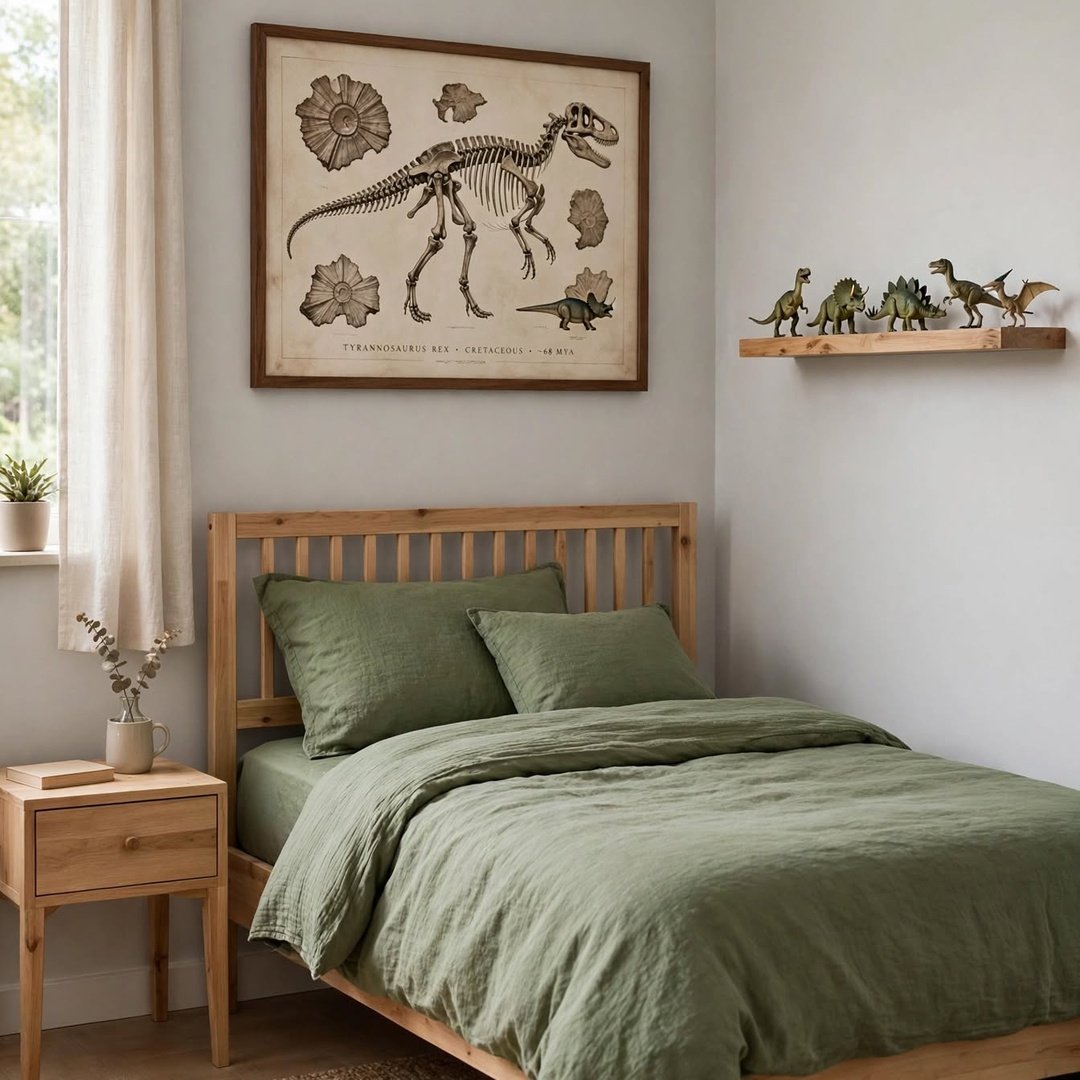
4. Repeat Colors Instead of Repeating the Theme
You do not need the same rocket, dinosaur, or animal motif on the bedding, rug, curtains, lamp, and artwork.
Repeating a few colors can connect the room just as effectively.
For example, if a space artwork includes navy, blue, white, and gray, those colors might appear again in:
- bedding
- a blanket
- storage baskets
- a bedside lamp
- a small rug
The room still feels coordinated, but the theme is not repeated everywhere.
This also makes future changes easier. Navy bedding, for example, can continue to work even if a child eventually moves from space to sports, travel, or another interest.
5. Give Favorite Collections One Place to Live
What are some fun things to put in a boy’s room?
Books, LEGO builds, models, sports items, drawings, souvenirs, and other favorite collections can make a bedroom feel much more personal.
The key is giving them a defined place instead of spreading them across every available surface.
A display area might be:
- one floating shelf
- a picture ledge
- the top of a dresser
- a small bookcase
- a few open cubbies
If the display begins to feel crowded, rotate items rather than continuously adding more shelves.
A small number of favorite objects displayed together usually looks more intentional than the same objects spread across a desk, dresser, bedside table, and windowsill.
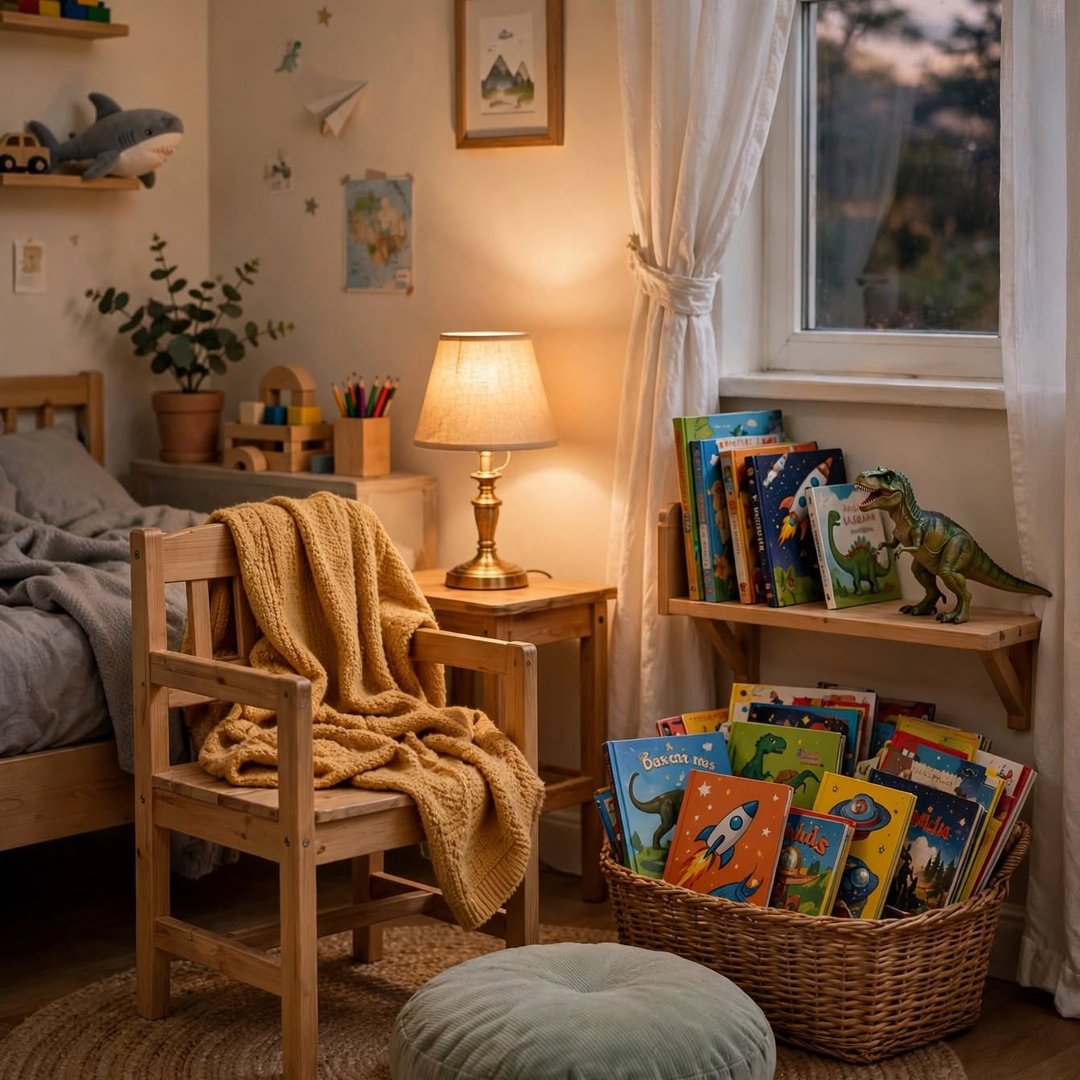
6. Create a Comfortable Reading or Quiet Corner
A bedroom becomes more useful when it has somewhere to relax outside the bed.
A reading corner does not need much space. It might include:
- a floor cushion or small chair
- a basket of books
- a reading light
- one small shelf
This gives the room another purpose while adding very little visual clutter.
For younger children, it may be used for picture books and quiet play. As they get older, the same corner can become a place to read, draw, listen to music, or simply spend time alone.
In a small bedroom, look for an unused corner beside a dresser or near the foot of the bed rather than adding a large piece of furniture.
7. Let Bedding Carry Some of the Personality
Bedding is one of the easiest decorative elements to change, which makes it a useful place for stronger colors or patterns.
A room could combine:
- light walls
- simple furniture
- one dinosaur artwork
- green or earthy bedding
Or:
- white walls
- natural wood furniture
- lunar artwork
- navy bedding
The bedroom clearly has a direction, but most of the permanent elements remain flexible.
If interests change later, replacing bedding and artwork can update the room without repainting or replacing furniture.
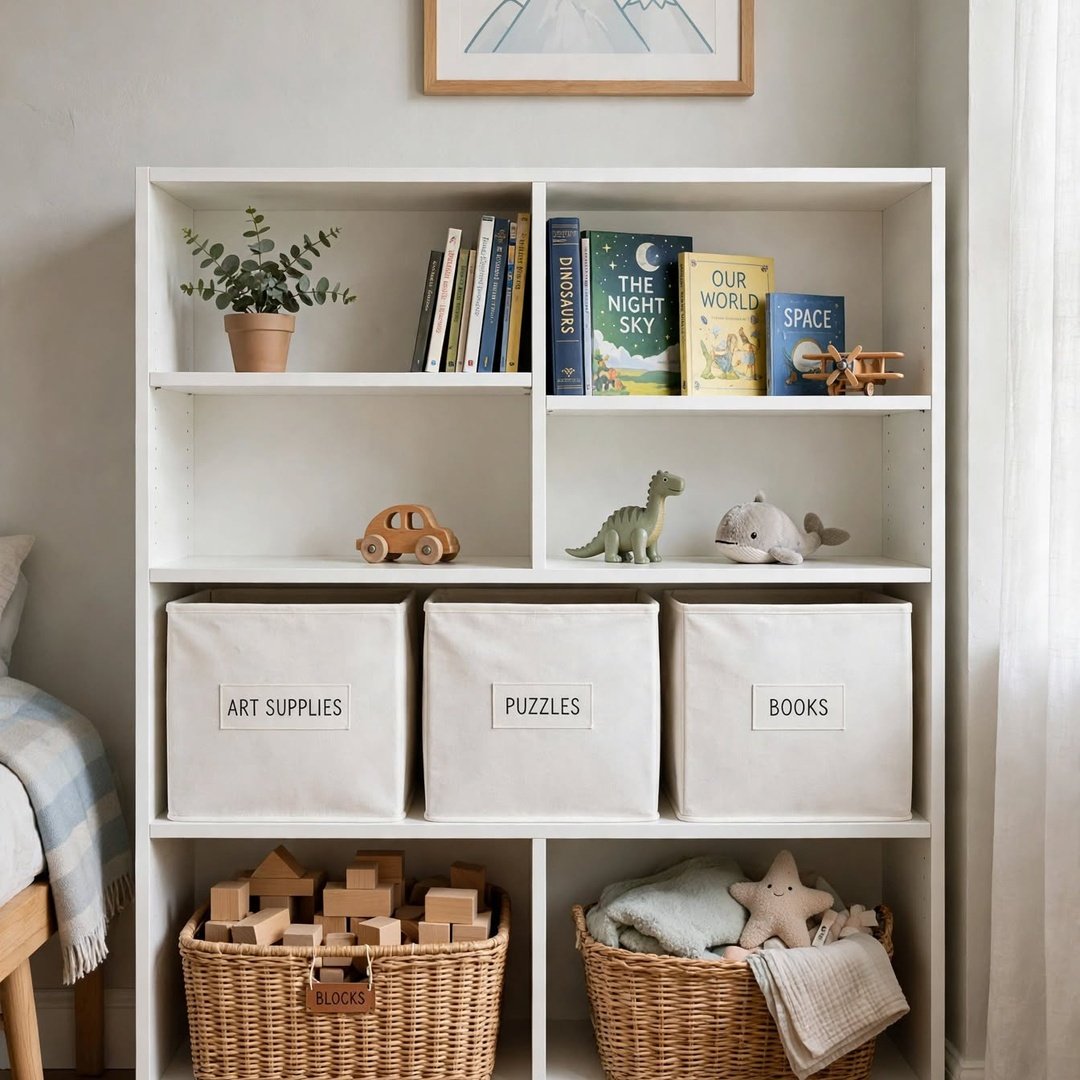
8. Mix Open and Closed Storage
Not everything in a child’s bedroom needs to be displayed.
Open storage works well for objects that contribute to the room, such as:
- books
- selected models
- a few favorite toys
- framed pictures
- carefully chosen collections
Closed storage is often better for visually busy items such as:
- building blocks
- action figures
- craft supplies
- puzzles
- game pieces
- mixed small toys
A useful approach is to display the things worth seeing and store the things that mainly need a home.
This makes the room easier to tidy and prevents everyday belongings from competing with the decorative elements.
9. Choose One Feature That Makes the Room Feel Fun
How do you create a fun boy’s room?
A fun boy’s room usually needs only one or two memorable features rather than many novelty decorations.
That feature could be:
- a large piece of wall art
- an accent wall
- a distinctive lamp
- a world map
- a reading tent
- a favorite collection on display
- a patterned rug
Once you have chosen a strong feature, keep some of the surrounding elements quieter.
For example, if the wall above the bed already has dramatic space artwork, simple bedding may work better than another large space pattern.
If the rug is colorful, the curtains can be simpler.
Giving one element more attention usually creates a clearer, calmer room than making everything equally bold.
10. Put Changing Interests Into Easy-to-Replace Pieces
Children’s interests do not always last as long as their furniture.
A child who loves dinosaurs at six may prefer space at eight, sports at ten, or something entirely different at twelve.
That does not mean you should avoid decorating around favorite interests. It means the most specific parts of the theme are better placed in things that can be changed easily.
Good places for changing interests include:
- wall art
- posters
- bedding
- cushions
- books
- small accessories
- display objects
Larger investments such as the bed, dresser, desk, and storage are usually more useful when they are not tied too closely to one theme.
This lets the bedroom change gradually instead of requiring a complete redesign.
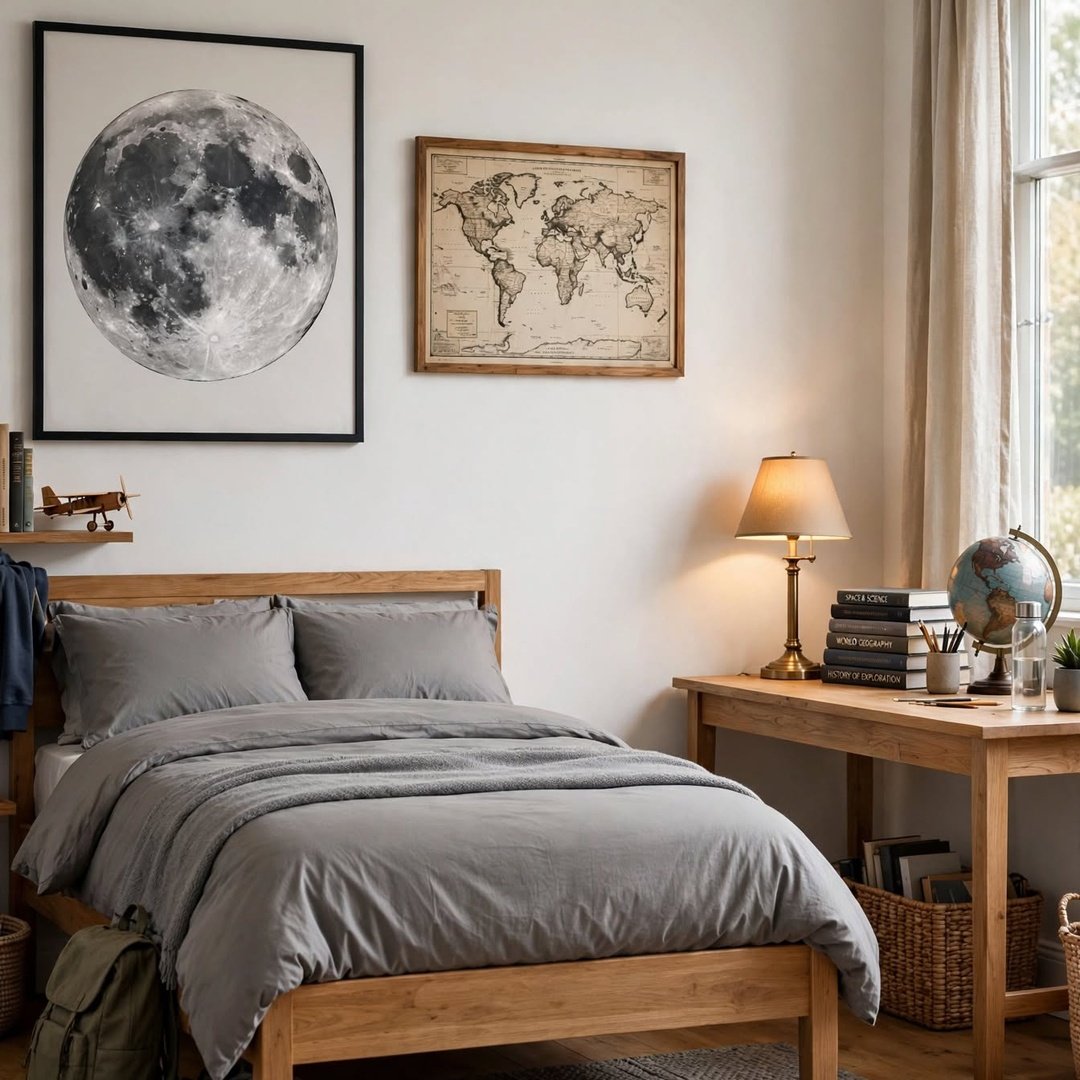
11. Make the Room Easy to Update Around Ages 10–12
What are some cool ideas for a 12-year-old boy’s room?
For a 12-year-old, the room often works better when it reflects personal interests in a less childlike way.
The interest itself does not necessarily need to disappear. The way it is shown can simply become more mature.
For example:
| Younger room | Older direction |
|---|---|
| Cartoon rockets | Astronomy or lunar artwork |
| Bright dinosaur characters | Fossils or natural-history imagery |
| Toy-car decor | Automotive or travel imagery |
| Colorful ocean characters | Marine artwork and deeper blues |
| Character bedding | Solid, striped, or geometric bedding |
A room built on simple furniture and flexible colors can make this transition much easier.
Sometimes changing the artwork, bedding, lighting, and displayed objects is enough to make the entire bedroom feel more age-appropriate.
12. Leave Some Space Undecorated
Not every wall, shelf, or corner needs something in it.
Leaving some areas open helps the room feel calmer and makes the things you do choose more noticeable.
Before adding another decoration, ask whether it improves the room or simply fills an empty space.
Some open space can help:
- a small bedroom feel larger
- artwork stand out
- furniture feel less crowded
- toys stay easier to manage
- future changes become easier
It also leaves room for a child to add new interests over time rather than starting with a bedroom that already feels full.
How Can You Tell When a Boy’s Room Feels Too Busy?
A boy’s room may be becoming visually overwhelming when too many elements compete for attention at once.
Common signs include:
- several unrelated themes in the same room
- strong patterns on walls, bedding, rugs, and curtains at the same time
- collections spread across many surfaces
- very little empty wall or floor space
- toys mixed with decorative displays everywhere
- no obvious focal point
One simple test is to stand at the doorway and notice what catches your eye first.
If there is one clear focal point—such as the bed, artwork, or reading area—the room usually feels easier to understand visually.
If everything demands attention at once, removing or simplifying a few elements can make a noticeable difference.
How Can You Make a Boy’s Room Cool Without Buying Everything New?
Start by changing the most visible and easiest-to-replace elements.
You may only need to update:
- wall art
- bedding
- lighting
- displayed collections
- desk accessories
- a rug or blanket
Then remove decorations the child has clearly outgrown.
The existing bed, dresser, desk, shelves, and wall color may still work perfectly well.
A space-themed room, for example, can move from bright rockets and stars toward lunar landscapes, astronomy, darker bedding, and a cleaner display area without replacing the main furniture.
This approach is especially useful when moving toward the teen years.
A Simple Way to Plan the Room
When starting a new bedroom or refreshing an existing one, make the practical decisions first.
Begin with the bed, storage, desk, and other furniture the child actually needs. Then choose a simple color direction and decide which interest or feature will give the room personality.
After that, add artwork, bedding, books, collections, and a few accessories.
It is usually easier to add one more thing later than to remove a room full of decorations that are competing with one another.
The result should still feel unmistakably like the child’s room—just with enough visual breathing space for the things he loves to stand out.
Boy Room Ideas That Can Grow With Him
A fun bedroom does not need to be filled with themed products.
One strong artwork can establish a space theme. A dinosaur collection can live on a single shelf. An ocean-inspired room may only need blue accents and one underwater focal point.
Keeping the larger parts of the bedroom adaptable allows those interests to change naturally.
The goal is a room that feels personal today without making every decorating decision permanent. Give the child room for the things he enjoys, keep everyday storage practical, and leave enough flexibility for the bedroom to change as he does.