
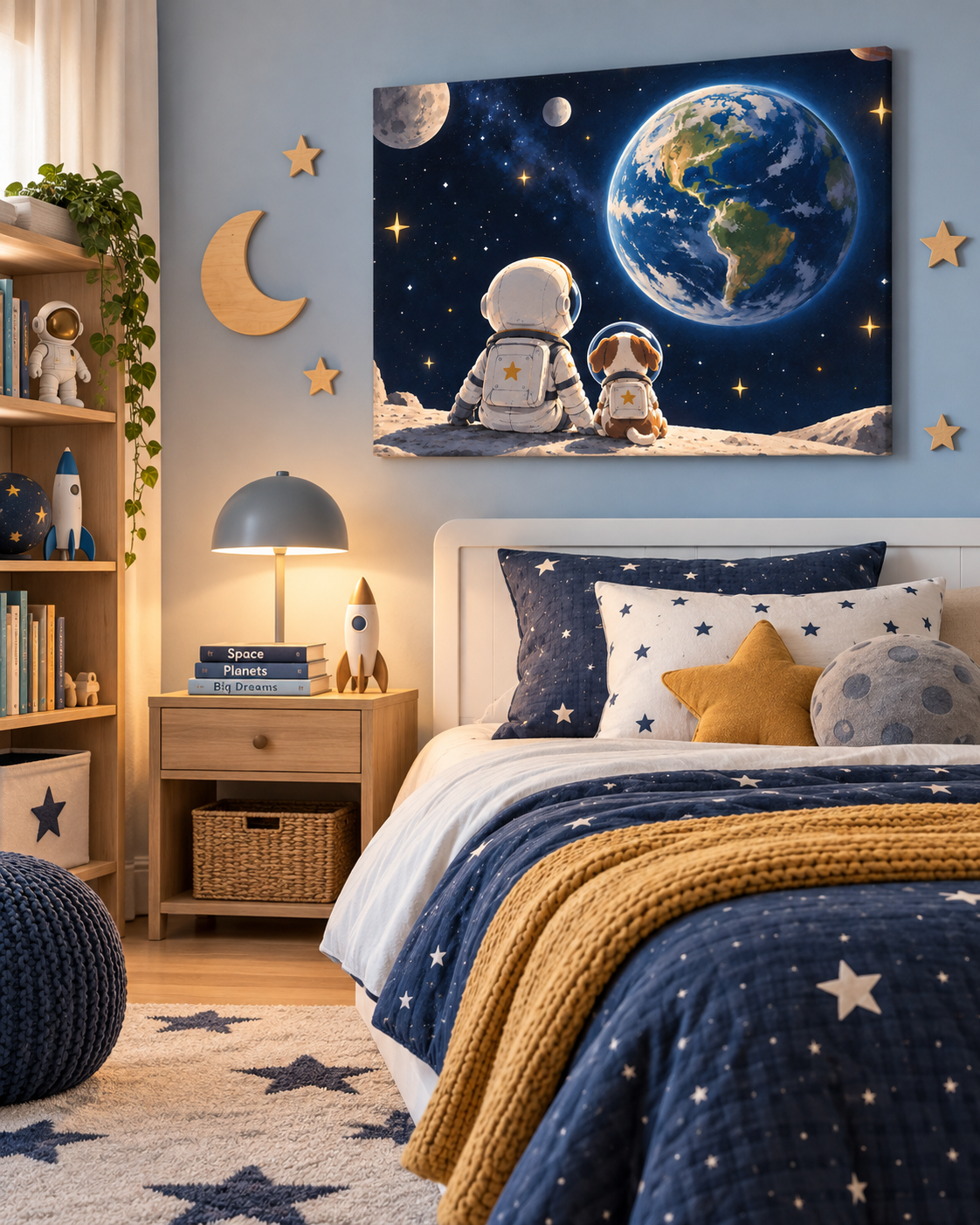
A kids room can have the right furniture, comfortable bedding, and plenty of storage but still feel as though something is missing. Often, the walls are what make the difference. Thoughtful wall decor can connect the colors and personality of the room without filling every available surface.
These wall decor ideas for kids rooms focus on creating spaces that feel playful enough for children while still fitting naturally into the rest of the home. The goal isn’t to cover every wall. It’s to choose a few elements that make the room feel more intentional and complete.
1. Start With One Large Piece of Wall Art
Instead of filling a wall with several small decorations, try one larger piece of art above the bed, dresser, or reading area. It gives the eye somewhere to land and can immediately make the room feel more finished.
Choose artwork that reflects something your child enjoys—space, animals, the ocean, nature, or another favorite subject—while keeping the colors connected to the rest of the room.
2. Create a Small Coordinated Art Pair
Two coordinating prints can work beautifully when one large piece feels too dominant. Hang them side by side above a bed, desk, or low storage unit.
They don’t need to be identical. A shared color palette or theme is usually enough to make the pair feel intentional while keeping the wall interesting.
3. Let the Wall Color Do Some of the Decorating
Wall decor doesn’t always have to mean adding more objects. A soft blue, warm neutral, muted green, or gentle blush can become part of the room’s overall design.
Once the wall itself provides color, even simple artwork can stand out. This approach is especially useful when you want the room to feel imaginative without becoming visually busy.
4. Build a Simple Gallery Wall
A gallery wall can bring personality into a kids room, but it doesn’t need ten or twelve different pieces. Three to five carefully chosen items are often enough.
Mix illustrations, photographs, children’s artwork, or simple decorative pieces while keeping one element consistent. Similar frames, repeated colors, or a common theme will help the arrangement feel connected rather than random.
5. Add a Little Imagination Above the Bed
The space above the bed naturally attracts attention, making it a good place to introduce a favorite theme.
A child who loves space might enjoy planets and stars, while an ocean-inspired room could use underwater artwork. Keep the rest of the area relatively simple so the feature feels special instead of competing with other decorations.
6. Use Wall Decor to Define a Reading Corner
A small reading corner can feel like its own little destination with just one thoughtful wall element. Hang a favorite illustration above a chair, floor cushion, or small bookshelf to visually define the space.
The artwork doesn’t need to be large. Its job is simply to give the corner an identity and make it feel intentionally created for quiet time.
7. Display Children’s Artwork Thoughtfully
Children’s drawings can become meaningful bedroom decor when they’re displayed with a little structure. Rather than attaching artwork randomly across the walls, select a few favorites and give them dedicated spaces.
Simple frames, clip rails, or a small rotating display make it easy to change the artwork over time. The room stays personal without becoming cluttered.
8. Try a Gentle Pattern on One Wall
A subtle pattern can add character without requiring traditional wall art. Small stars, dots, clouds, simple shapes, or another restrained motif can create interest across an otherwise plain wall.
Keep the pattern relatively simple and leave some open space around it. A wall doesn’t need to be completely covered to make an impact.
9. Connect Wall Decor With the Bedding
A room often feels more complete when the wall and bed seem to belong together. Look at the colors already present in the bedding and repeat one or two of them in the wall decor.
The match doesn’t have to be exact. A navy detail in a blanket, for example, could be echoed in artwork with a deeper blue background. Small visual connections like these help the room feel coordinated without looking overly matched.
10. Give the Play Area Its Own Wall Moment
Wall decor can also help separate different activities within the same bedroom. A piece of cheerful artwork above a toy shelf or play table can visually mark that part of the room as the play zone.
This is especially helpful in smaller rooms where sleeping, reading, playing, and storage all share the same space. The wall becomes a subtle way to create structure without adding more furniture.
11. Leave Some Walls Quiet
One of the easiest ways to make kids room wall decor look more intentional is to know where to stop. Every wall doesn’t need artwork, shelves, decals, or decorations.
Leaving some open wall space gives the pieces you do choose more presence. It can also make a small bedroom feel calmer and less crowded, especially when toys, books, and colorful textiles already bring plenty of visual interest.
12. Choose Decor That Can Grow With the Room
Children’s interests change quickly, but that doesn’t mean the entire room needs to be redesigned every time they discover something new. Use easily changed wall decor for the most specific themes while keeping larger elements more flexible.
A simple room can move from dinosaurs to space or from ocean animals to adventure with a few thoughtful changes. This makes it easier for the bedroom to evolve as your child grows.
A Finished Room Doesn’t Need a Full Wall
The most successful wall decor doesn’t necessarily come from adding more. It comes from choosing pieces that have a clear relationship to the room—through color, theme, placement, or the way the space is used.
A single large artwork, a small gallery, a playful pattern, or a thoughtfully decorated reading corner may be all that’s needed. When there is enough room for both personality and breathing space, a kids room can feel imaginative, comfortable, and genuinely finished.